



Protecting Roses in the Heat
 For warmer climates, namely zones 8-11, caring for roses in the heat can be nerve-racking. Especially as temperatures get hotter and hotter, and our dry spells last longer. You may be wondering whether or not your rose can beat the heat, so here's a little advice from our hot garden to yours- mainly directed at climates with temperatures consistently above 90 degrees.
First things first: During the summer, your roses may not look like they're in the best shape- which is perfectly natural. It can be concerning to see that, above the ground, your rose may have blemishes, falling leaves, lack of new growth or blooms, and maybe a little bit of sunburn. If your roses have a solid foundation (mature roots, healthy soil), they will likely do just fine!
What to Expect from Roses in Heat? See here.
"I live in a very hot climate... can I still grow roses?" Yes! Roses are more resilient than people give them credit for. Roses have been found naturally in every climate within the northern hemisphere.
See our collection for Heat-Tolerant Roses here.

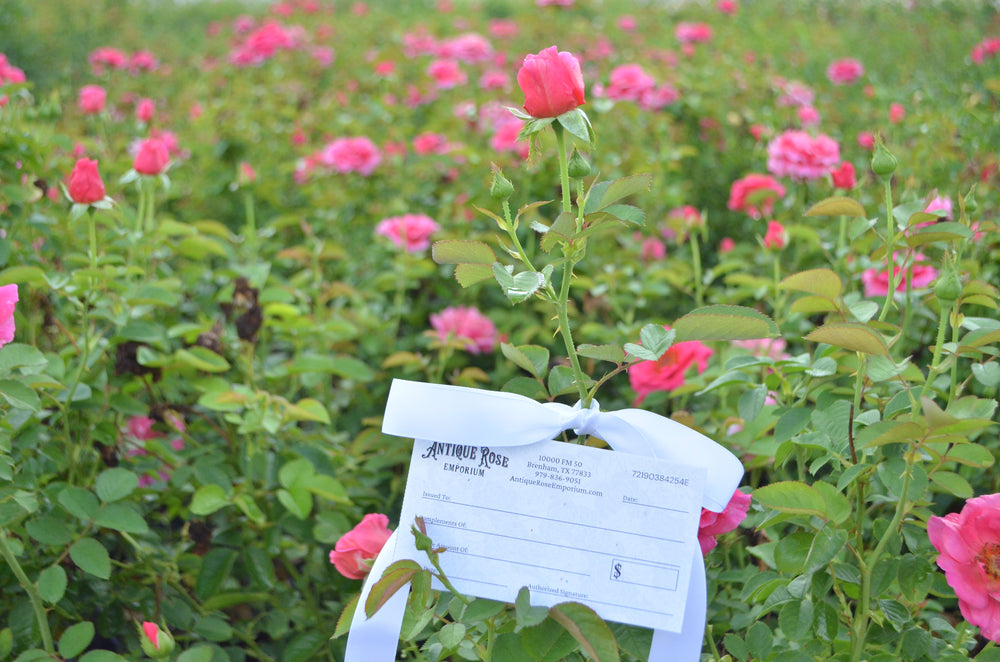
We promise, your rose will not spontaneously combust as pictured above. This photo was taken for artistic purposes only.
Watering is crucial... but how do I know if it's not enough or too much?
Sometimes it's difficult to tell whether your rose needs water. Are those leaves wilting because it's thirsty or drowning?
Firstly, if leaves are wilting, it's best to evaluate other symptoms before jumping to conclusions. If the leaves or canes are somewhat squishy, and the leaves are soft, limp, or even yellowing and falling, this is likely the result of OVER-watering. Meanwhile, the signs of UNDER-watered roses will be browning and crispiness of leaves, along with brittleness in leaves and canes.
The best way to ensure proper watering is to check the soil moisture between watering sessions. While moisture meters are available to purchase, likely at your local garden center, we prefer testing by feel. Dig your finger 4" deep into the soil (not including mulch)- if you still feel moisture, it's too soon to water. If it's completely dry, now's the time.
In the summer, water in the early morning or evening to avoid excessive evaporation. Thoroughly water your rose to encourage deep, strong roots.
More details on watering here.
Is the sun scorching my rose?
Your roses can get sunburnt. On blooms, this usually looks like crisping and browning of the edges of petals, and for foliage, it often looks like the darkening or blackening of leaves, usually starting at the top of the plant (closest to the sun). The leaves will eventually turn red-brown and curl inward. See photos.


Pictured is Burgundy Iceberg.

While some sunburn will not harm your rose in the long term, you may consider getting a shade cloth if:
- Your rose is difficult to keep adequately watered, and the sunburn is accompanied by brown, crispy wilting.
- The sunburn is covering a third of the rose or more.
- You're starting to lose canes one-by-one.
- You have your rose right by a reflective or heat-trapping material, such as concrete, brick, a metal building, or rocks.
How important is mulching?
Very! We often associate mulching with winter protection, but in warmer climates, it is especially important during the summer. If you still have a layer of mulch going strong from your last application, it may not be necessary to reapply. But if your last layer has broken down to less than two inches, we highly recommend reapplying.
Mulch will insulate the soil and roots, keeping that intense heat from penetrating the ground. This also helps the soil retain moisture, which keeps your rose from drying rapidly.
Discover which mulch material would work best for you here.
Do not mulch with rocks! Rocks will reflect heat on your rose, burning it from all sides.
Should I prune & deadhead roses even in the dead of summer?
Though it may be tempting to "clean up" your rose by deadheading spent/unattractive blooms and pruning off damaged canes and foliage, this could end up stressing your rose.
While roses do not go dormant in intense summer heat as they do in winter, they still want to focus their energy on their roots. Deadheading and pruning can signal the rose to flush out new growth, which is much more susceptible to weather damage.
IF your rose shows no signs of stress and is even putting on healthy, new growth, you could always deadhead to see if it will put out a summer bloom. Even still, for warm climates, we recommend waiting to lightly prune until the hottest part of the year has passed.
Fertilizing: the do's and the don'ts
DO: Feed your rose during the summer with gentle, organic fertilizers and/or amendments, such as MicroLife Ocean Harvest, Super Seaweed, Mycorrhizal Plus, or Fish Emulsion. Compost is also a great choice.
See our fertilizer recommendation page here.
DON'T: Use all-purpose garden fertilizers with a high nitrogen (N-P-K) content, and especially not synthetic fertilizers, as these can burn your roses.
DO: Fertilize at the cooler times of day, such as dawn or dusk, and be sure to water it in.
DON'T: Fertilize in the middle of the day, when the sun is at its most intense.
TIP: Follow application rates and timing according to the package instructions, and never exceed. However, during the summer, you can apply at half rates to provide an even gentler boost for your stressed plants.
Container roses & heat: the pros & the cons
The advantage to container roses is (sometimes) the ability to move the pot. If your rose is in a spot where it's happy most of the year but maybe a little too intense during the summer (for example, a Western-facing location), you can move it to a more friendly home. We never recommend indoors.
That being said, there are also many downsides to having a rose in a pot. Naturally, the roots will be much less protected and insulated than in-ground roses, meaning they can heat up and dry out quickly. Stay on top of watering your container roses during the summer. You may need to water every other day, depending on a few factors mentioned below. Be sure to check the soil and follow the same watering recommendations mentioned earlier on this page.
Watering frequency is influenced by pot size and material. The smaller the container, the more surface area it has, which means it will need to be watered more frequently.
Some things to keep in mind for those planting in containers in warmer climates: porous materials such as terracotta will likely need more watering, and metal pots will burn your roses.
See more details on Choosing the Right Pot Size & Material here.
Conclusion
We hope that with this guide, you will feel more comfortable about your roses in the heat of the summer.
If you have any other questions regarding weather protection, please see our other blogs or reach out to us at gardenquestions@weareroses.com.