



Why We Choose Own-Root
What do we mean when we say our roses are "own-root"? And how is this beneficial? Learn more here about why we grow our roses in own-root 2-gallon pots.
What Makes Our Roses Different: Own-Root, 2-Gallon Pots
Own-Root vs Grafted Roses
An own-root rose is a rose that grows on its own root system rather than being attached to a different rootstock (like grafted roses are). Most commercially produced own-root roses are propagated from cuttings, which are encouraged to develop their own roots before growing into a complete plant. Because the roots and the above-ground growth belong to the same rose, the entire plant is genetically the same variety.
Roses can also be grown from seed, but there is an important distinction: a rose grown from seed is not necessarily genetically identical to the parent plant. Seed-grown roses can have characteristics from both parent plants and are commonly used in rose breeding.
So why does the distinction between own-root and grafted roses matter?
Roses have traditionally been propagated and grown using both methods, and each has its own advantages and considerations. The best choice can depend on the rose variety, climate, soil conditions, and how the rose will be grown.
Benefits of growing own-root roses include:
- More frequent, fragrant, and true-to-form blooms.
- More vigorous growth than grafted roses.
- More cold-hardy and resistant to extreme weather, diseases, and pests.
-
Increased lifespan.
- Fun Fact: while grafted varieties generally live anywhere from around 6-15 years, own-root roses can live upwards of 50 or more years. One of the world’s oldest known roses in Germany has been around since 815 A.D., surviving the bombings of World War II - that’s one tough flower!
- They can be useful for preserving historic varieties. Growing a rose on its own roots allows the variety to be maintained without depending on a particular rootstock.
A grafted rose is made by joining two different roses together to create one plant. The desired flowering variety, called the scion, is attached to a separate rose variety known as the rootstock. The rootstock provides the roots and supports the plant, while the scion produces the stems, leaves, and flowers gardeners want from the particular rose variety.
Grafting is a long-established horticultural technique, and it can offer practical advantages in certain growing conditions. Some rose varieties may be easier to grow, establish, or produce commercially when paired with a particular rootstock.
While many rose varieties can automatically come as grafted, even if they could do well own-root, some reasons why one might want a grafted rose are:
- To get their desired rose that may not be cold-hardy enough for their area, so they opt for a grafted rose with a rootstock that can more easily withstand freezing temperatures.
- There are downsides to this, however, as the desired portion of the rose could die off, leaving only the rootstock to grow out into a completely different rose. Grafted roses require special winter protection.
- To grow roses in an area where, otherwise, roses may not do well.
- For example, parts of Florida struggle with root-knot nematodes in the soil, which harm and can eventually kill roses. Rootstocks of the Fortuniana rose are resistant to root-knot nematodes, so many gardeners in this area will look for grafted roses with that rootstock.
Grafted roses can grow suckers* from the rootstock, which means you have to be vigilant to keep the rootstock rose from overtaking your desired rose.
*A sucker is vigorous growth that emerges from below the graft union and belongs to the rootstock. On an own-root rose, there is no separate rootstock, so technically there aren't rootstock suckers. Suckers originating from rootstock can differ significantly from the flowering variety above the graft. Having a vigorous new cane emerge from the base doesn't automatically mean it's a sucker; on an own-root rose (like in the case of a basal break, see below), or from above the graft union on a grafted rose, that can actually be desirable new growth.
Why we grow in 2-gallon pots
We don't grow bare-root, and we don't dig up our roses. We take most of our own cuttings and grow them out in liners, or we buy liners and then transplant them into 2-gallon pots (larger than industry standard), where they grow throughout the year until they're ready to sell.

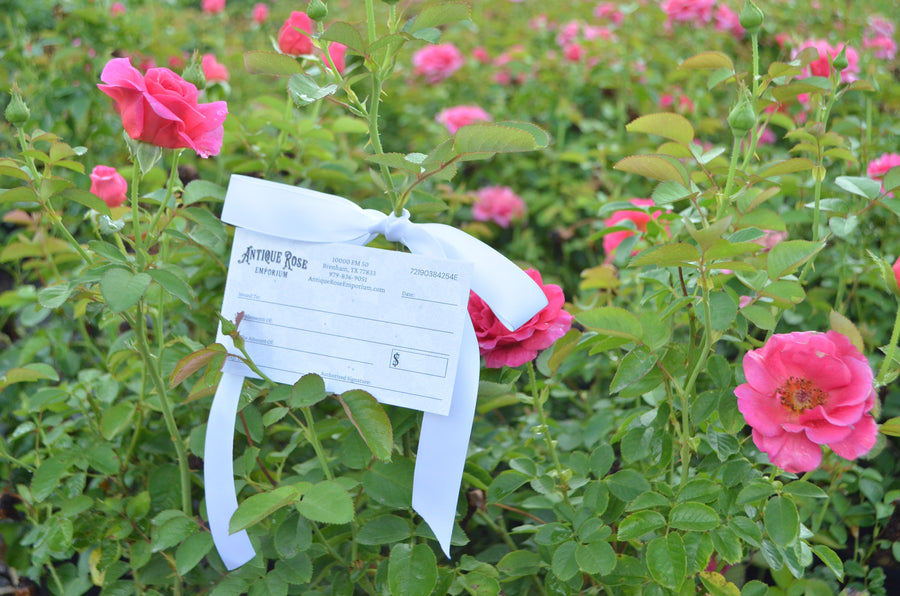
Example of baby roses just after they've been transplanted from liners, starting their journey in their 2-gallon pots.
Roses are usually aged anywhere between 9 and 18 months by the time we release them for sale, depending on how fast-growing the variety is. While they may get relatively large in the pots out in our fields, we must cut them back to 12-18 inches to fit in our secure packaging.

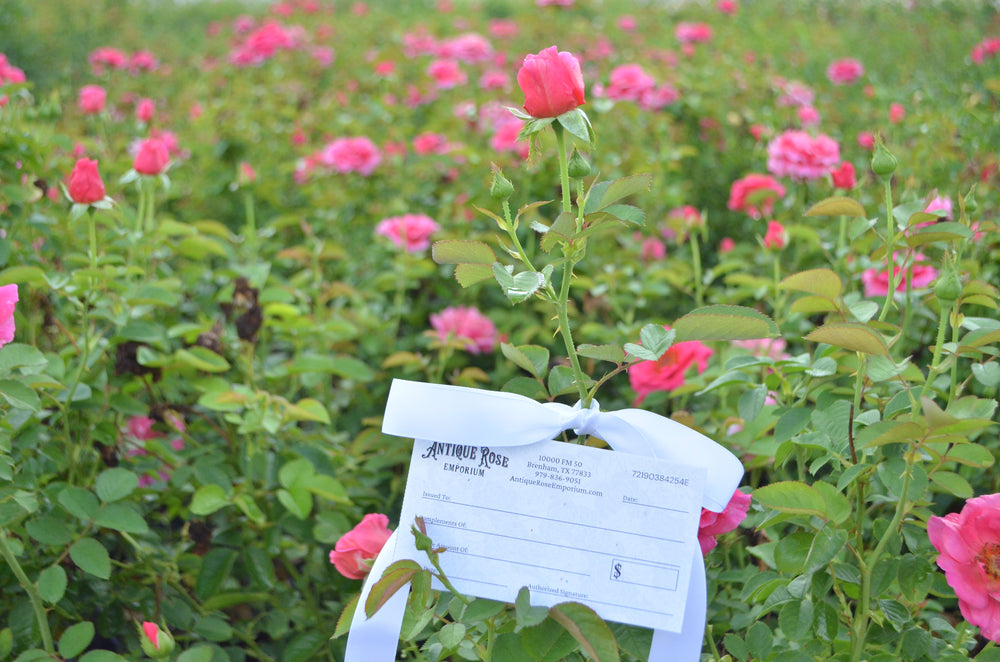
Example of roses in their pots in our fields.
Our 2-gallon pots make it so that you receive a rose:
- With well-developed roots.
- That will leaf out and potentially flower quickly.
- That can be planted any time during your growing season.
- That will have less likelihood of experiencing transplant shock.

Conclusion
We hope that with this guide, you will feel more comfortable about selecting roses for your garden.
If you have any other questions regarding more details on rose information, please see our other blogs or reach out to us at gardenquestions@weareroses.com.